About
The Scalable lab tackles computationally demanding challenges in research and industry. We cover the disciplines involved from the bare metal of computer architectures to fully automated production workflows by integrating modeling and simulation, high-performance computing, software engineering, data analytics, and verification and validation. This overarching approach is key to building visionary, portable, robust and efficient software pipelines.
Team
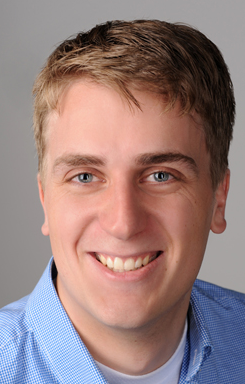 |
Alex Breuer leads the lab. His research and teaching activities cover the full spectrum of algorithms and software for modern and emerging hardware. In 2014, Alex was honored with an ACM/IEEE-CS George Michael Memorial HPC Fellowship for his Ph.D. project “High Performance Earthquake Simulations”. In addition, he and his collaborators have been awarded with the PRACE ISC Award and nominated as ACM Gordon Bell finalists. Alex holds a doctoral degree from the Technical University of Munich. |
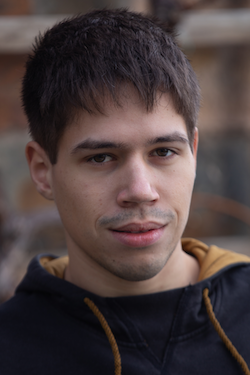 |
Max Engel holds a Master’s degree in Computer Science from Friedrich Schiller University Jena. In his Master’s thesis, Max implemented and analyzed the numerical core of an ADER-DG finite element solver using the high-performance tensor library PyTorch. His Ph.D. research revolves around efficient algorithms and software backends for high-performance tensor contractions, with a special focus on the Einstein summation convention. |
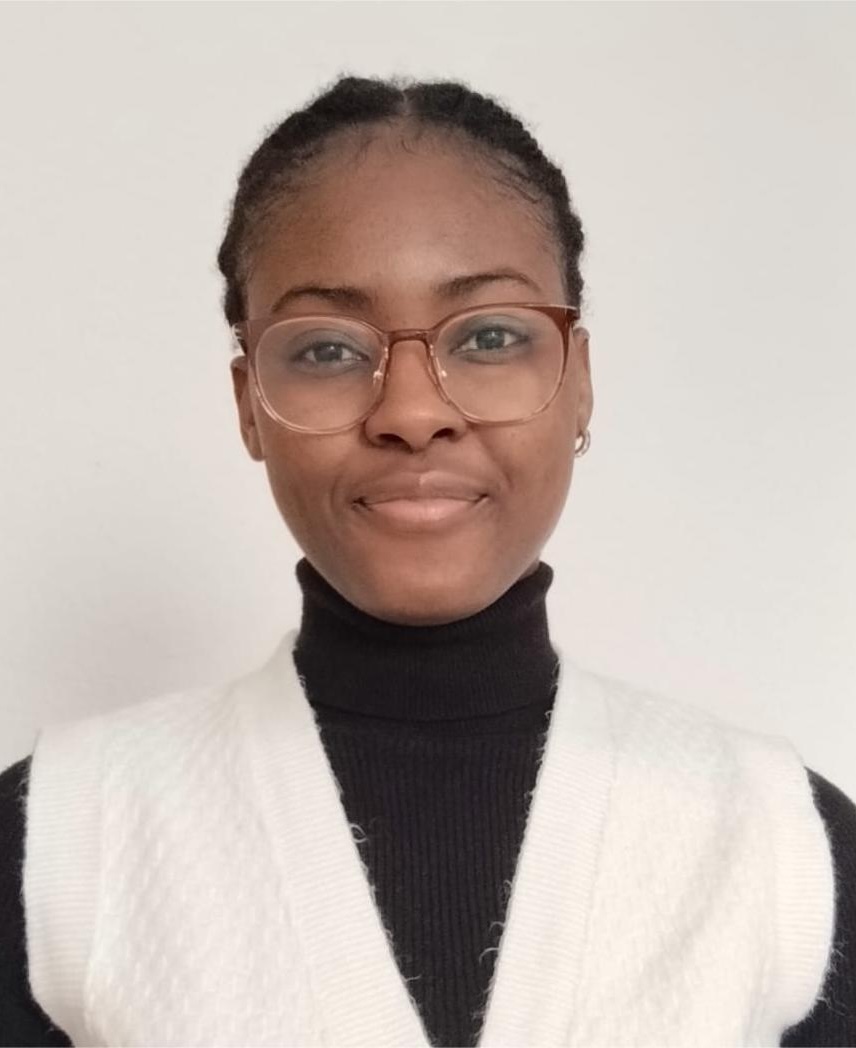 |
Ketsia Kemkuini is a Master’s student in Computational and Data Science at Friedrich Schiller University Jena. Through the Honours Programm, she works on the systematic fusion of general tensor contractions to address performance limitations caused by data movement in modern computing systems. Her research focuses on developing automated methods to identify and optimize fusion strategies in tensor-based computations. |
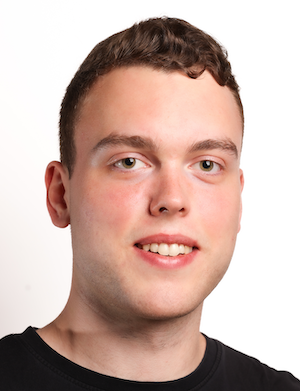 |
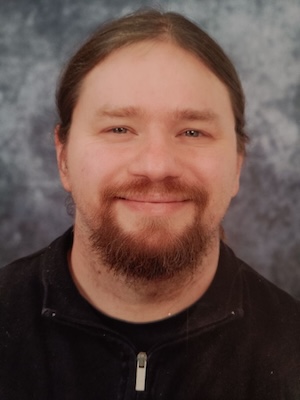
Max Koch holds a master’s degree in Computer Science from Karlsruhe Institute of Technology and a bachelor’s degree from Friedrich Schiller University Jena. In his master’s thesis, Max developed a distributed compiler for the Einstein summation convention, accelerated using GPUs. His Ph.D. research continues to focus on high-performance algorithms for tensor operations, with an emphasis on optimizing computations for hardware accelerators. |
 |
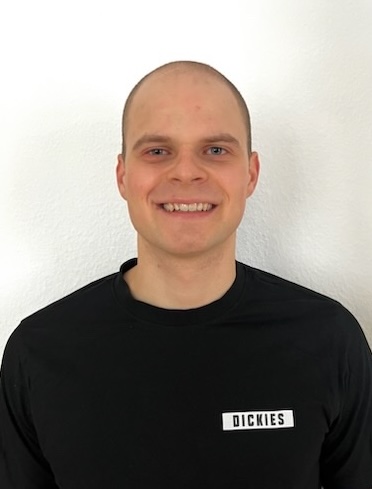
Felix Lindner holds a Master’s degree in Computer Science from University of Applied Sciences Bingen. In his Bachelor’s thesis, Felix implemented a recurrent neural network in OpenCL. For his Master’s thesis, he used GPUs to accelerate fluid dynamics simulations. His Ph.D. research focuses on tensor compilation to lower tensor contractions to different hardware. This approach is based on the einsum notation. |
 |
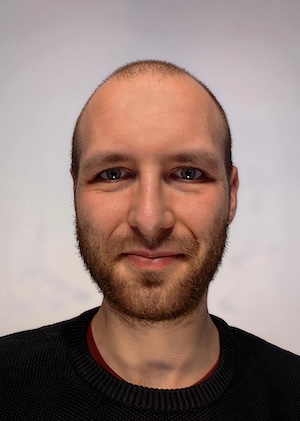
Stefan Remke is a researcher in the lab and graduate student at Friedrich Schiller University Jena, majoring in Computer Science. Stefan optimizes high-performance computing primitives for the Arm Neoverse V2 microarchitecture. As part of his work, he is developing just-in-time code generation routines for small matrix-matrix kernels targeting NVIDIA’s Grace CPU Superchip. In addition, Stefan explores the generation of tensor processing primitives for Qualcomm’s Neural Processing Unit through the Hexagon Vector Extensions. |
 |
Tamino Steinert is a Ph.D. candidate working at the intersection of compiler construction and emerging AI hardware accelerators. His current research develops high-performance compute kernels for the AMD XDNA architecture and integrates them into an MLIR-based tensor compiler framework, building on his master’s thesis, “Fast Tensor Contractions on an XDNA Neural Processing Unit”. During his bachelor’s studies, he specialized in high-performance database systems. |
Contact
Prof. Dr. Alexander Breuer (alex.breuer@uni-jena.de)
Friedrich-Schiller-Universität Jena
Fakultät für Mathematik und Informatik
Institut für Informatik
Professur für Skalierbare daten- und rechenintensive Analysen
Ernst-Abbe-Platz 2
07743 Jena
Germany